Manassas was chartered as a town on April 2, 1873. Its eight National Register listings, from Liberia to the 1914 water tower, with dates and how to visit.
Last checked Oct. 19, 2026. History comes from the City of Manassas history page and the Manassas Museum’s historic sites pages; register listings and dates from the Virginia Department of Historic Resources, the state historic preservation office.
Manassas was born as a railroad junction and chartered as a town on April 2, 1873, when the Virginia General Assembly gave the village of about 300 people its own government, the city says. The area had been known as Tudor Hall before the Civil War and as Manassas Junction during it, when two major battles were fought nearby. Today the city has eight places on the National Register of Historic Places, a free city museum and two Civil War forts you can walk. Questions: the Manassas Museum, 9101 Prince William St.; Parks, Culture and Recreation, 703-368-1873.
What this means for you
- Start at the Manassas Museum: free, 10 a.m. to 5 p.m. Tuesday to Saturday, noon to 5 p.m. Sunday.
- Walk the forts: Mayfield Fort (8401 Quarry Road) and Cannon Branch Fort (10611 Gateway Blvd.) are open city park sites with trails.
- Downtown’s railroad-era core is the Manassas Historic District, listed on the National Register in 1988.
A short history
- 1850s: the Orange and Alexandria Railroad and the Manassas Gap Railroad meet here, and a settlement grows around the junction (DHR).
- 1861-1865: with little more than a few homes and a depot, Manassas Junction becomes known around the world for the two battles fought nearby. Confederate troops build 11 earthworks to guard the railroad in 1861; Union troops hold the Mayfield earthwork from August 1862 to November 1864.
- 1870: by this year African Americans have founded the Manassas Village Colored School, renamed the Brown School a year later. Ruffner School, the state’s first public school for white children, follows in 1872.
- April 2, 1873: the town is chartered. Union veteran George Carr Round and Confederate veteran Robert Carter Weir, the first mayor, serve together in the new town government.
- 1892-1893: the Prince William County seat moves to Manassas from Brentsville, and a Romanesque courthouse is completed in 1893, DHR records.
- 1893: Jennie Dean, born enslaved, founds the Manassas Industrial School for Colored Youth.
- 1914: the town builds its 147-foot water tower, the heart of its first municipal water system, and the Southern Railway rebuilds the downtown depot after a fire.
- 1917: a town ordinance regulates where African Americans may live, and neighborhoods stay largely segregated; many Black families settle around Liberty, Douglas and Prince William streets.
- After World War II: farmland gives way to suburbs.
- 1975: Manassas becomes an independent city, separate from Prince William County, Northern Virginia Magazine reported for the city’s 150th anniversary in 2023.
National Register listings in Manassas
| Place | Address or location | Listed on the National Register | What it is |
|---|---|---|---|
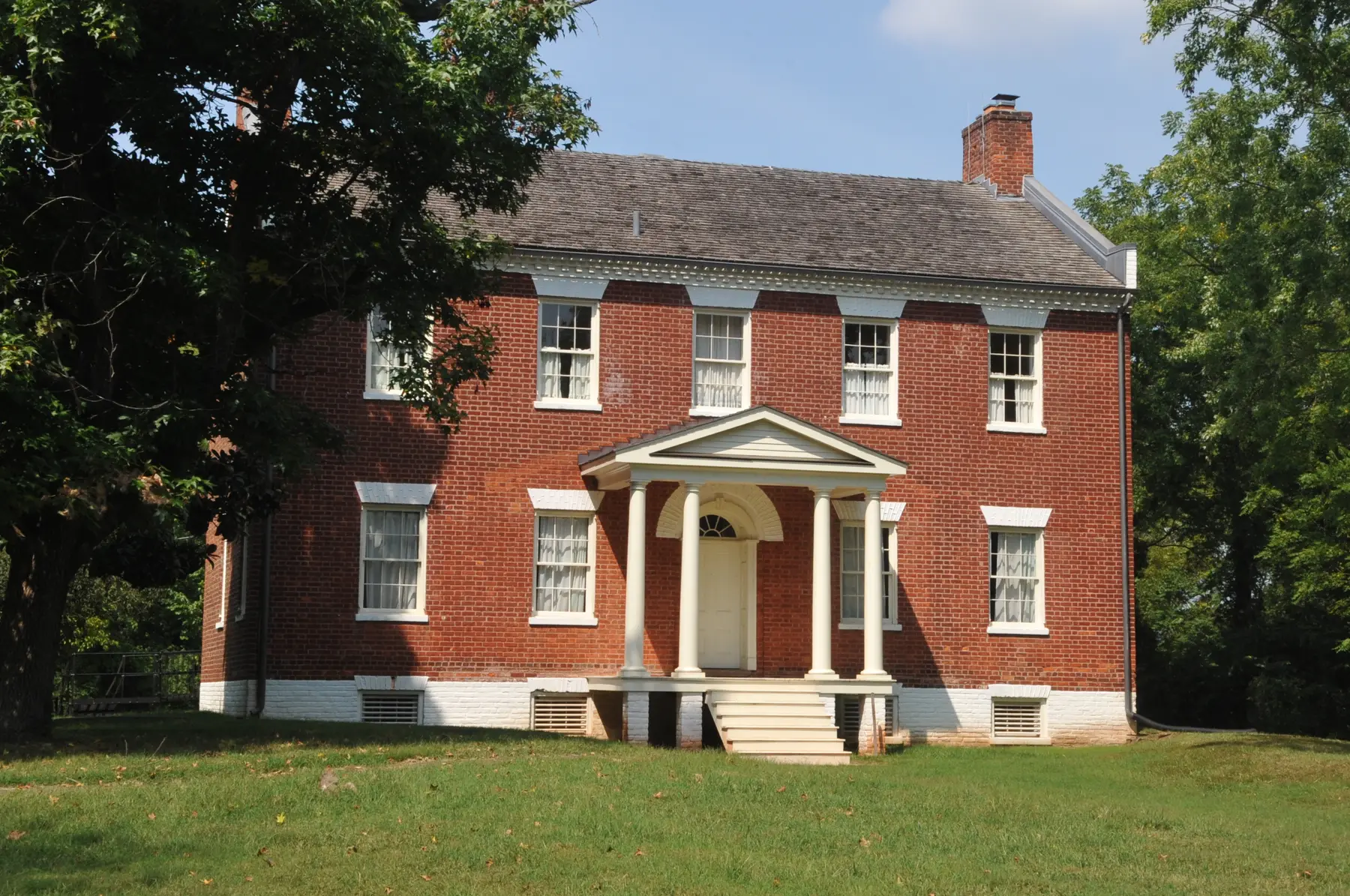
| Liberia | 8601 Portner Ave. | March 20, 1980 | 1825 house; headquarters for Gen. P.G.T. Beauregard in 1861 and Union Gen. Irvin McDowell in 1862, when President Abraham Lincoln met McDowell there on June 19, 1862 |
| Manassas Historic District | Downtown | June 29, 1988 | The railroad-era town center, anchored by the 1914 depot |
| Mayfield Fortification | 8401 Quarry Road | Aug. 8, 1989 | The only survivor of 11 Confederate earthworks guarding the railroad, begun May 1861 |
| Manassas Industrial School for Colored Youth | 9601 Wellington Road | Aug. 1, 1994 | Site of Jennie Dean’s 1893 school, now a memorial park |
| Cannon Branch Fort | 10611 Gateway Blvd. | Aug. 26, 1999 | Earthwork likely built by Union forces in 1863-64 to guard the railroad |
| Prince William County Courthouse | Downtown | Feb. 11, 2004 | Victorian Romanesque courthouse completed in 1893 |
| Manassas Water Tower | Downtown, by the depot | Aug. 15, 2016 | 147-foot, 75,000-gallon steel tower built in 1914 |
| Annaburg | 9201 Maple St. | April 15, 2022 | Neo-Classical Revival summer home of brewer and inventor Robert Portner, built 1892-1894 |
Many buildings in the historic district are private homes and businesses; view them from the street.
Museums and sites you can visit
- Manassas Museum, 9101 Prince William St. Free. Open 10 a.m. to 5 p.m. Tuesday to Saturday and noon to 5 p.m. Sunday, plus Mondays in June to August and on federal holidays. Closed New Year’s Day, Thanksgiving, Christmas Eve and Christmas Day. Its collection is searchable online.
- Southern Railway Depot, 9431 West St. The 1914 depot, built with separate waiting rooms for white and Black passengers, now holds the Historic Manassas Inc. Visitor Center and a small rail history exhibit, On the Tracks of History. VRE and Amtrak trains still stop here.
- Liberia House, 8601 Portner Ave. The grounds and nature trails are open; the house opens for tours and events through the museum (RecDesk).
- Annaburg, 9201 Maple St. Grounds with interpretive trail signs, the Portner Tower and gardens; guided tours by booking.
- Mayfield Fort and Cannon Branch Fort: open sites with paths and markers. See our parks and trails guide.
- Jennie Dean Memorial, 9601 Wellington Road: interpretive signs and a statue of Jennie Dean.
- Manassas Volunteer Fire Company museum: restored engines including a 1909 Howe pumper. No set hours; call 571-292-9992 to arrange a visit.
- Manassas City Cemetery: the museum runs evening tours each fall, including Oct. 23, 2026 (details).
- Civil War Trails markers stand at several city sites; the museum lists them on its Civil War Trails page and a virtual historic site tour.
Manassas National Battlefield Park, where the First and Second Battles of Manassas were fought, is just north of the city and run by the National Park Service; see our parks and trails guide for hours.
Related: things to do this month and getting around.
Frequently asked questions
When was Manassas founded?
The Virginia General Assembly chartered the Town of Manassas on April 2, 1873. Before that the area was called Tudor Hall and, during the Civil War, Manassas Junction.
When did Manassas become a city?
Manassas became an independent city, separate from Prince William County, in 1975.
Is the Manassas Museum free?
Yes. The Manassas Museum at 9101 Prince William St. is free and open 10 a.m. to 5 p.m. Tuesday to Saturday and noon to 5 p.m. Sunday.
What historic places in Manassas are on the National Register?
Eight: Liberia (1980), the Manassas Historic District (1988), Mayfield Fortification (1989), the Manassas Industrial School for Colored Youth (1994), Cannon Branch Fort (1999), the Prince William County Courthouse (2004), the Manassas Water Tower (2016) and Annaburg (2022).
Why is it called Manassas Junction?
Manassas grew where the Manassas Gap Railroad met the Orange and Alexandria Railroad in the 1850s. During the Civil War the settlement around the junction was known as Manassas Junction.
Have your say